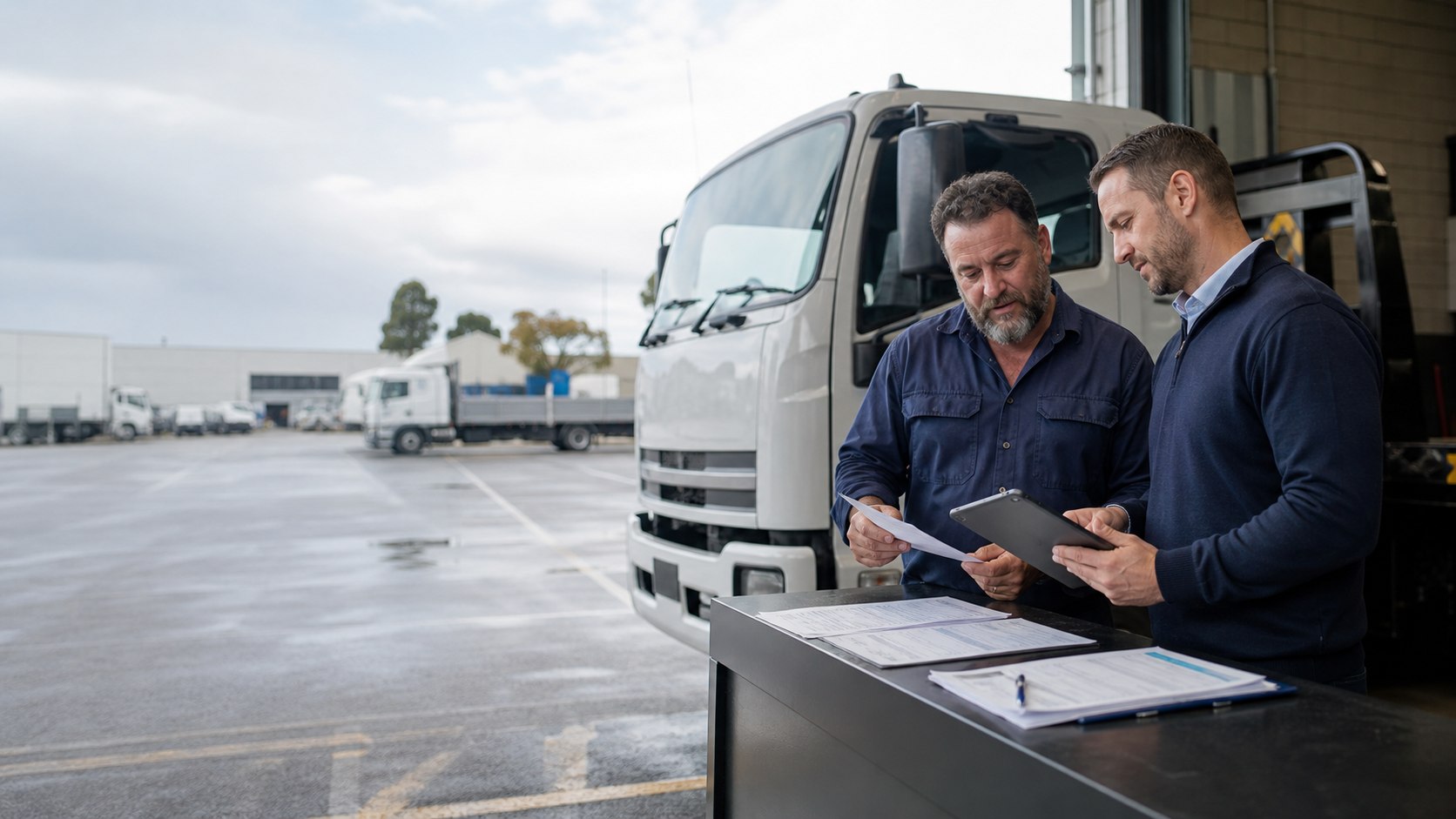
A Victorian truck sale goes more smoothly when ownership, registration, payment and collection records are prepared before the vehicle leaves. Use this checklist for rigid trucks, prime movers, tippers, vans and other commercial vehicles. Requirements can vary by registration type and ownership structure, so confirm the current position with VicRoads for your particular truck.
Start with the truck’s registration status
Registration status changes the paperwork. Confirm whether the truck is currently registered, unregistered, suspended or being sold after cancellation. Do not rely only on number plates or an old renewal notice.
For a registered Victorian vehicle, VicRoads tells sellers to check the roadworthy requirement, collect the buyer’s details and complete a notice of disposal. VicRoads also says the sale of a registered Victorian vehicle should be reported within 14 days.
Consumer Affairs Victoria states that an unregistered vehicle, or one whose registration has been cancelled, can be sold without a roadworthy certificate. That does not mean it can automatically be driven on a public road. Appropriate registration, a permit or suitable transport may still be required.
Documents to gather before accepting an offer
- Proof that you or your business is entitled to sell the truck
- VIN, chassis number, registration and build-plate details
- Current registration status and expiry date
- Service history, repair invoices and available manuals
- Finance payout or release information where applicable
- Company authority or estate documents if the registered operator is not signing personally
- A clear list of accessories, bodies, tools and loose parts included in the sale
- Known faults and the truck’s current operating condition
Registered Victorian truck sale checklist
When registration is being transferred with the truck, check the current VicRoads process rather than assuming a car-sale procedure applies in every situation. Trucks are included in the vehicle-sale process, but conditional registration, restrictions and business ownership may change the steps.
- Confirm the registered operator. Make sure the seller’s name or company matches the registration and supporting identity records.
- Check the roadworthy requirement. Confirm whether a valid certificate is needed for this vehicle and transaction.
- Record the buyer accurately. Obtain the buyer’s legal name, address and licence or business details required for the disposal notice.
- Complete the notice of disposal. Retain evidence that it was submitted.
- Cancel registration direct debit. Do this separately if it applies to the vehicle.
- Keep copies. Retain the receipt, transfer details, payment record and collection evidence.
VicRoads advises that companies and organisations cannot complete a transfer online through a myVicRoads business account and may need to attend a Customer Service Centre. Check this before scheduling collection so the truck is not released with incomplete transfer arrangements.
Unregistered or cancelled-registration truck sale
An unregistered truck can still be sold as an asset. Prepare a receipt or tax invoice showing the parties, date, agreed price, VIN or chassis number and exactly what is included. Confirm the current requirements for number plates and any registration refund.
Do not describe an unregistered or unsafe truck as ready to drive. The buyer may need an eligible unregistered vehicle permit or transport on a tilt tray, low loader or other recovery vehicle.
Payment and identity checks
- Verify who is buying the vehicle and who is making the payment
- Agree on the price and inclusions in writing
- Confirm cleared payment through your own banking channel
- Do not release the truck based only on a payment screenshot
- Record the date and time possession changes
- Issue and retain a signed receipt or invoice
If finance remains over the vehicle, obtain a current payout figure and a documented settlement plan. Never assume that receiving the sale proceeds automatically clears a financier’s interest.
Prepare the truck for collection
Tell the buyer whether the truck starts, drives, rolls, steers and brakes. Mention flat tyres, locked wheels, seized driveline components, loose accident damage, leaking fluids, low-clearance access, soft ground or loading restrictions. These details determine the recovery equipment and collection plan.
Remove toll tags, fuel cards, telematics hardware where appropriate, personal belongings and confidential business records. Photograph the truck and included equipment immediately before handover.
Records to retain after the truck leaves
- Signed receipt or invoice
- VIN, chassis number and registration details
- Buyer or business identification information
- Notice-of-disposal confirmation
- Payment and finance-release evidence
- Condition photographs taken at collection
- Collection docket or transport record
- Copies of any keys, accessories and documents supplied
Official Victorian guidance
Review the current VicRoads selling-a-vehicle guidance and Consumer Affairs Victoria unregistered-vehicle guidance before completing the transaction. Rules can change and unusual ownership or registration types may need extra steps.
Need an as-is truck assessment?
If the truck is damaged, unregistered or non-running, prepare the make, model, year, kilometres, location, fault details and clear photographs. VIC Trucks Buyer can assess the vehicle and discuss a suitable collection pathway. Send the truck details for an assessment.
This article provides general information and is not legal advice. Confirm the current requirements with VicRoads, Transport Victoria, your insurer or a qualified adviser where the circumstances are unusual.