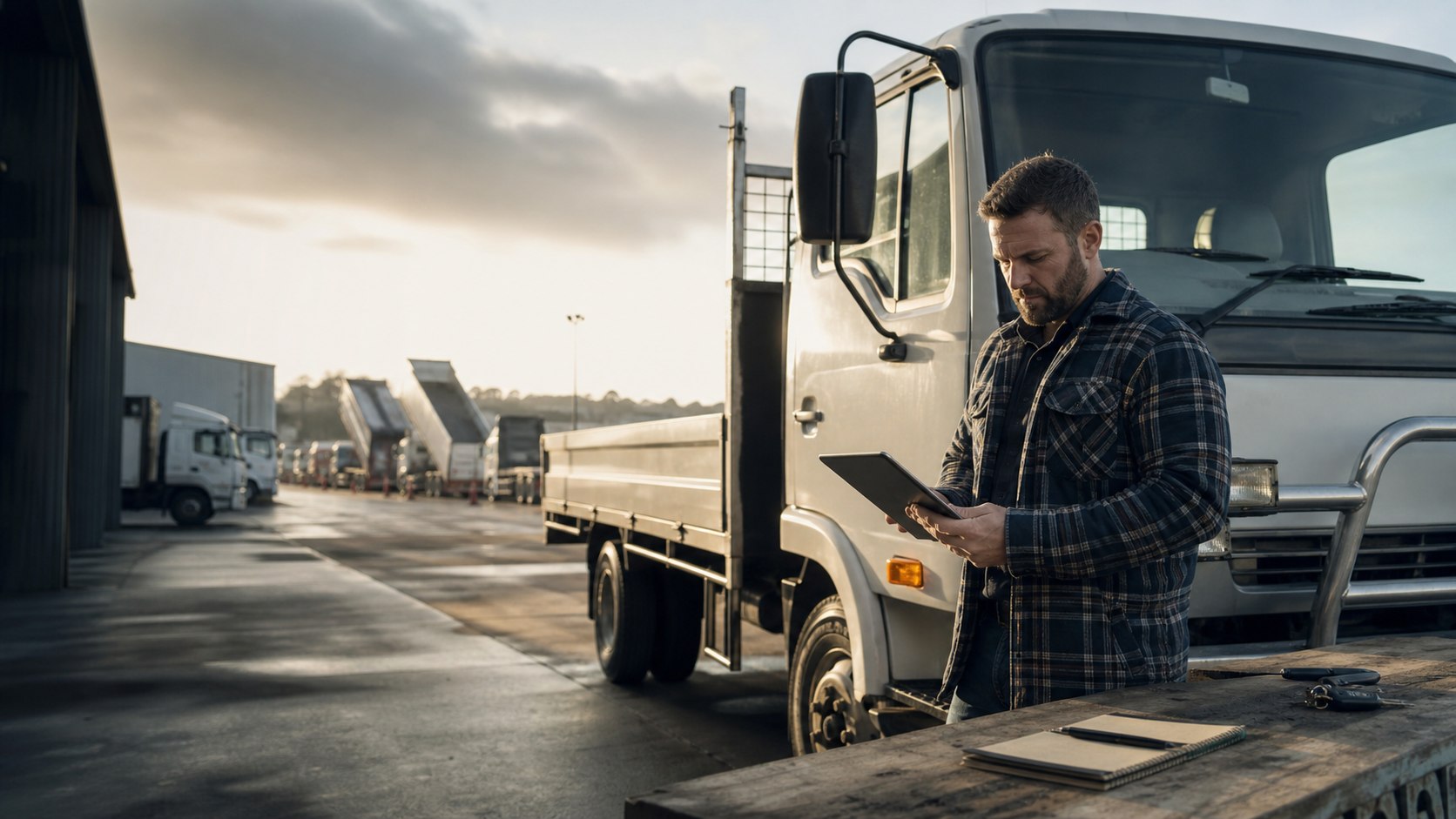
The best way to sell a used truck in Australia depends on whether you value maximum retail exposure, a fixed sale date, a convenient changeover or a fast as-is transaction. Compare the complete net result—not only the advertised price—before choosing a private sale, auction, trade-in or direct truck buyer.
Define what a successful truck sale means
An owner replacing a reliable late-model rigid truck may have time to advertise and wait for a strong private offer. A fleet manager with replacement vehicles arriving next month may value one coordinated disposal. A business with a failed engine blocking a loading area may need certainty and collection more than an ambitious asking price.
Set your priorities before requesting offers:
- Minimum acceptable net amount after every selling cost
- Latest practical sale and collection date
- Budget for repairs, detailing and roadworthy work
- Staff time available for enquiries and inspections
- Tolerance for negotiation, payment and collection risk
- Whether the truck is registered, damaged or non-running
Option 1: sell the truck privately
A private sale can provide strong retail exposure when the truck is presentable, accurately described and attractive to an individual operator. The seller controls the asking price, photographs, advertising and negotiation.
Private selling also places the workload and risk on the owner. You must prepare the vehicle, create the listing, answer enquiries, arrange inspections, verify the buyer, confirm cleared funds and complete the handover paperwork. Budget for advertising, repairs, roadworthy requirements where applicable and the possibility that the truck remains unsold.
Private sale usually suits
- Working trucks with a desirable specification
- Vehicles with useful service records and clear ownership
- Sellers who can wait for the right buyer
- Owners comfortable managing inspections and negotiation
Option 2: sell through an auction
An auction creates a defined campaign and sale date. It can suit standard fleet units, specialised equipment with a national buyer pool or groups of assets that can be marketed together. Competitive bidding may reveal demand efficiently.
Review the auction agreement carefully. Ask how reserves work, whether the sale is live or online, who prepares the description, how buyers inspect the truck and when payment is released. Calculate entry fees, commission, transport, storage, cleaning and any charge when the vehicle does not sell.
Option 3: trade the truck against a replacement
A dealer trade-in can be convenient because the outgoing and incoming vehicles are handled within one changeover. This may reduce downtime and administration for an operator who has already chosen the replacement truck.
Compare the replacement purchase price and trade value separately. A generous-sounding allowance can be offset by less discount on the new vehicle. If finance remains, obtain a current payout figure and understand exactly how it will be settled.
Option 4: sell directly to a truck buyer
A direct buyer assesses the truck with the intention of purchasing it rather than advertising it on the owner’s behalf. This pathway can suit high-kilometre, surplus, unregistered, damaged and non-running trucks because condition and collection are discussed from the beginning.
The ideal private asking price may be higher than a direct offer, but the direct pathway commonly requires less preparation, seller time and open-ended waiting. Confirm whether collection is included, when payment clears, which components are included and what paperwork will be supplied.
Compare the net result, not the headline offer
Subtract every cost that applies to the selling method:
- Mechanical repairs and body work
- Detailing, photography and advertising
- Auction fees, commission, storage and transport
- Staff time spent on calls, inspections and negotiation
- Registration, roadworthy and administration costs
- Downtime, insurance and storage while waiting for a buyer
Also consider execution risk. A possible higher price months from now is not automatically better than a documented as-is amount with a workable payment and collection date.
Should you repair the truck before selling?
Only approve major repairs when the likely increase in net sale value comfortably exceeds the repair cost, downtime and risk of finding additional faults. Obtain at least one as-is assessment first. That gives you a baseline for comparing the likely benefit of further spending.
Relevant repair records can reduce uncertainty, but recent invoices rarely add their full cost to the vehicle’s market value.
Prepare accurate truck details
- Make, model, year and exact body type
- VIN, kilometres or operating hours
- Registration and roadworthy status
- Service history and recent repair records
- Known mechanical, electrical, body and tyre faults
- Whether the truck starts, drives, rolls, steers and brakes
- Clear photographs of every side, cab, body, engine area and access route
Accurate information helps each buyer assess the same vehicle and reduces last-minute changes.
Payment, paperwork and handover
Verify the buyer, confirm cleared payment through your own bank and do not rely on a payment screenshot alone. Record the VIN, agreed price, inclusions, date and time on the receipt or invoice. Victorian sellers should check current VicRoads guidance for roadworthy, transfer and notice-of-disposal requirements.
Before collection, remove toll tags, fuel cards, personal items and confidential business records. Keep condition photos and disposal confirmation.
Which option is best?
Choose a private sale when the truck has broad retail appeal and you can manage the work and waiting time. Choose auction when a defined campaign and competitive bidding suit the asset. Choose trade-in when changeover convenience matters. Choose a direct truck buyer when you need an as-is proposal, documented timing and practical collection.
Start with a condition-based benchmark before choosing the channel. Prepare the details for a truck valuation or contact VIC Trucks Buyer to discuss the vehicle.